
AI Won’t Save You Without the Human Skills to Use It
AI Won't Save You Without the Human Skills to Use It
We talk a lot about AI capability. Tools, platforms, adoption rates, automation. What we talk about far less is whether our people are actually equipped to make any of it work.
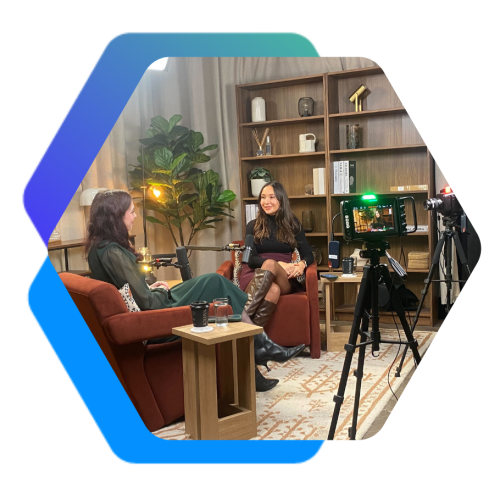 Louise Fraser recently sat down with Alysha Adams — people and culture leader, NED, and keynote speaker — on We Need to Talk About HR, and one thing Alysha said really cuts to the heart of the issue: "You can bring technology into the room, but it's the culture, it's the people, it's the skills within that room that enable you to do something exciting with it. Otherwise, it's sitting in a box in the corner."
That's where most organisations are right now. The technology is in the room. The results aren't following.
The problem isn't the technology
When AI adoption falls flat, the instinct is to assume it's a systems problem. Wrong tool. Bad implementation. Not enough training on the platform. Alysha's view is that it's almost always a culture problem. The outcomes organisations want from AI — being innovative, moving fast, staying competitive — aren't AI outcomes. They're human outcomes that AI can enable. But only if the culture to support them already exists.
Psychological safety. Space to experiment. A genuine appetite for doing things differently. Those don't come from a software licence.
The skills gap no one is talking about
There's a set of skills that are genuinely foundational to AI adoption — curiosity, creativity, critical thinking, emotional intelligence, growth mindset — and most organisations are not investing in them. These are what Alysha calls "meta skills": timeless human capabilities that have always mattered, but that we've never been particularly good at valuing or measuring.
Socrates was writing about critical thinking thousands of years ago. It's also the skill we need most to work effectively with AI today. That's worth sitting with for a moment.
People are joining the workforce with a deficit in these areas. Our education system is built around knowledge retention and task completion — not the kind of creative, curious, ambiguous thinking that the AI era demands. So the workplace has to pick up the slack. And most workplaces aren't ready to do that intentionally.
What good looks like
Alysha's work centres on helping organisations build these capabilities properly — not through a one-day workshop and a Slack channel, but through genuine culture change. That means working with leadership to understand what needs to shift structurally, connecting the development of these skills to business outcomes people already care about, and recognising that curiosity and creativity aren't soft extras. They are, as Alysha puts it, your human edge — the thing AI cannot replicate.
One example that came up in the conversation: a forward-thinking tech company has stopped running graduate programmes and built its own alternative pipeline from scratch. Their reasoning? University isn't producing the thinking styles they need. They want people who can build from scratch, think critically, solve novel problems — not repeat what they've been taught.
 That's a radical move. But it's one more organisations may find themselves considering, one way or another.
What HR leaders should do now
Alysha's advice is straightforward: invest in your people as your competitive edge. Technology will keep changing. The pace of that change will only accelerate. What organisations actually need is a workforce that can keep up — one that's resilient, adaptable, and genuinely curious about what comes next.
These skills take time to build. They're not instantaneous. If you want to be ahead of your competitors in two to three years, the time to start is now.
Not as a soft culture initiative. As a strategic business priority.
This post was inspired by Louise Fraser's conversation with Alysha Adams on We Need to Talk About HR. You can listen to the full episode on Spotify here or Apple here.
Share this